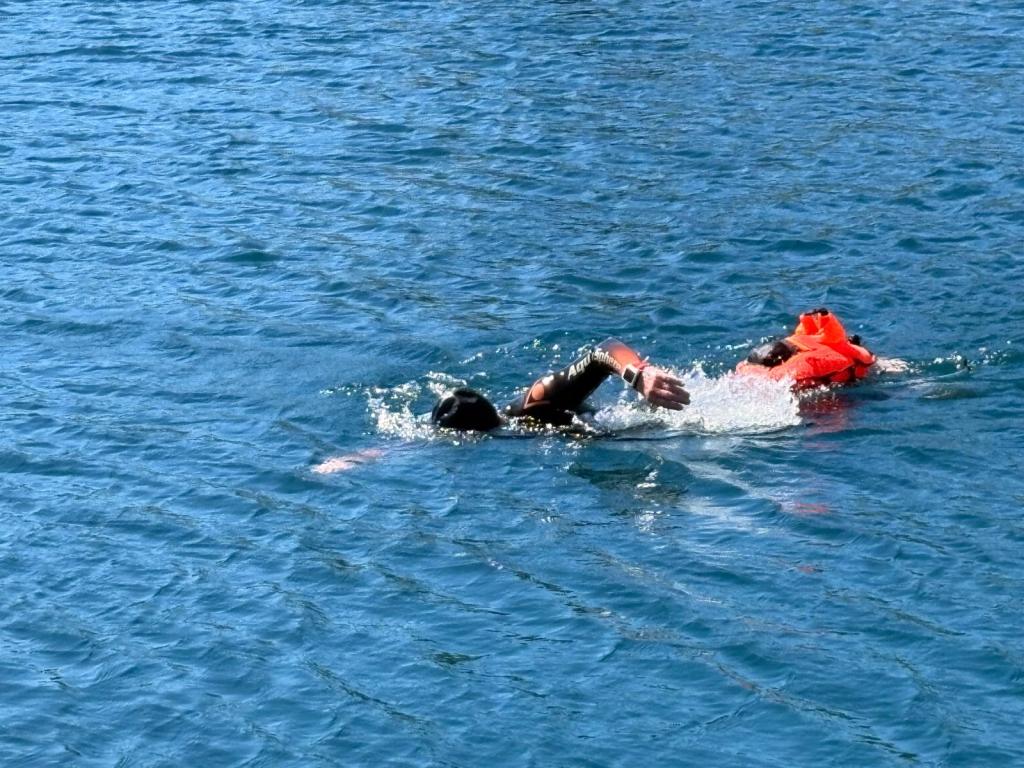
With the weather getting better, obviously most of you aspiring triathletes and swimmers competing in Open water swim events will be looking to get out there. Whilst I am not going to suggest how much OW swimming you should definitively do, here are some pointers.
The minimum OW swimming possible before an event is obviously zero. Whilst this is not ideal it is possible for a more experienced swimmer. If you are strong and confident in the water you will find little difference and can therefore ‘just get in there’. (My first OW training session was after I had already swam in three events.)
However for the vast majority of triathletes (and OW swimmers) i would definitely advise you to practise OW before an event and to do it with plenty of time, if possible, so that you can take more sessions if necessary to get used to it.
If you are a pretty confident swimmer and you don’t think you will have issues with swimming outdoors then two sessions could be enough. One to literally just get in and swim with no pressure and to check out all your kit. Then another where you attempt to swim your event distance at race pace. (Or practise parts of it.)
I am not suggesting you should not do more OW swimming if you are able to. One or two sessions a week would be brilliant, however, for most people that are ‘time challenged’ OW sessions may not be as practical. (They require more planning, organisation of kit, travelling time and tend to not be in early morning or late evening.) Therefore you may need to weigh up the benefits of say a 3 hour round trip to do a one hour swim compared to your normal swim on the way to work!
The other thing to consider here is the temperature, unless your event is going to be in particularly cold water i don’t think you need to spend time building yourself up to train in colder temperatures. That time is better spent getting time training on one of the other three disciplines.
For me, one of the biggest benefits of the training pool is the ability to use the pace clock. This makes it ideal for fine tuning pace judgement so that when you get OW that is pretty much ingrained. The pace clock also allows for very focussed sessions of 45-90 min duration.
For those doing longer events (IM swim distance and longer) I find that the Open water is better suited for longer continuous swims of an hour or more. Also of use is to practise some skills such as sighting, swimming with others, streamlining and even practising how the event will start. Is it a beach entry? or a mass start from in the water? If it is the second option you will need to be able to tread water (which is an essential skill you should practise any way.)
The final, and most important, thing is to stay safe. Try to swim in a group or with a partner. If possible use an organised session or a manned establishment. Make sure people know you are out and wear the proper stuff so you can be seen. (ie a swim buoy.) IF IN DOUBT DONT GO IN.
These musings I would suggest are for those people who are pretty experienced in the water. For those very worried about getting in the OW I will go through a few tips in another post.
 streamlinedswimming.co.uk
Leave a comment